



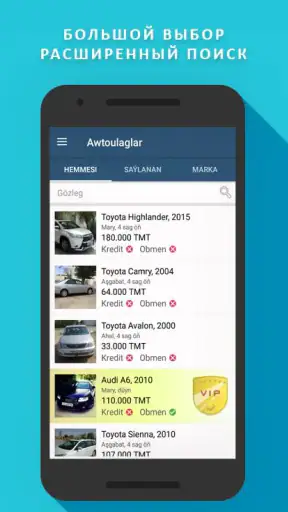


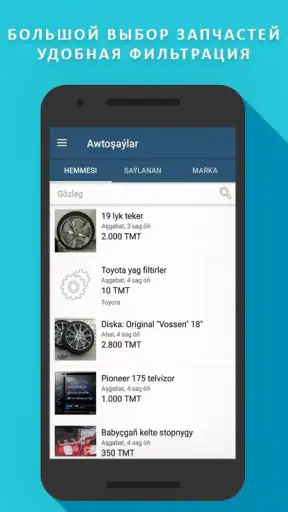
I first approached TMCARS as a practical marketplace app rather than something I would open for entertainment. Its focus is vehicles and other classified listings, so the real question is not whether it feels exciting on day one, but whether it remains useful when the search becomes routine. After spending time with it, my impression is that its strongest value comes from making local browsing more convenient, especially for people who regularly compare cars, parts, services, or general advertisements from a phone.
The app is free, aimed at everyone, and belongs in the Auto & Vehicles category. It was developed by Meretniyazov A., and the current version is 3.8.5. It has built a sizeable audience, with more than five million installs and an average score of 4.3 from roughly ninety-four thousand ratings. Those figures suggest that it is not a tiny specialist tool used by only a handful of buyers. At the same time, popularity alone does not guarantee that every listing will be useful, so I paid more attention to how well the app supports repeated searching and decision-making.
How TMCARS Fits Into Real Vehicle Shopping
The first-week appeal is immediate browsing value
The most obvious attraction is speed. Instead of relying only on conversations, noticeboards, or scattered social posts, I can open one place and start looking through vehicle-related advertisements. That is particularly helpful when I am still deciding what I want. Early research is rarely a straight line: I might begin with one model, notice a price difference, then switch to another year, body type, or condition. A classifieds app makes that wandering phase easier because I can compare possibilities without committing to a seller.
I also like the broader scope implied by the app’s focus on vehicles and other advertisements. Someone may arrive looking for a car but end up checking accessories, replacement items, or a service-related listing. That wider marketplace approach can be more practical than a narrowly focused car database when the purchase involves several steps. Buying a vehicle often creates follow-up needs, and having related advertisements nearby may reduce the number of separate places I need to check.
My advice during the first week is to treat the app as a discovery and comparison tool, not as proof that a deal is safe. A polished photo and an attractive asking price are only starting points. I would record the details that matter to me, compare several similar advertisements, and contact a seller only after checking whether the description answers basic questions. This habit prevents the common mistake of becoming attached to the first appealing listing.
One useful workflow is to search in stages. I begin broadly to understand the local range, narrow the results by the features that genuinely matter, and then return to the broader view before making a decision. If I filter too aggressively at the start, I can miss reasonable alternatives or misunderstand how unusual my preferred combination really is. With a marketplace such as this, the first week is most valuable when it teaches me the shape of the available market rather than simply helping me find one advertisement.
What makes the app useful for everyday scenarios
Imagine I need a replacement vehicle after an unexpected problem with my current one. I may not have time to visit several sellers in person, yet I also do not want to buy impulsively. I can use TMCARS to scan advertisements during a commute break, identify a few realistic options, and prepare a short list of questions before arranging a viewing. That does not replace inspection, but it makes the early selection process less chaotic.
A different scenario is a planned purchase. If I am saving for a car, recurring browsing helps me learn which options sit within my budget and which features push the price beyond it. I can also notice how much variety exists before deciding whether to wait. This is where the app feels more useful than a single seller’s page: it supports comparison across many individual advertisements rather than presenting one controlled inventory.
It can also serve people who are not ready to buy. A driver looking for a part or a related service can use the wider advertisement section to investigate what is available locally. The benefit is convenience, but the trade-off is that broader coverage may require more patience. Not every result will be equally relevant, and I should expect to spend time separating a genuinely useful listing from one that only looks close to my search.
Why it compares well with ordinary alternatives
The usual alternatives are asking friends, checking social networks, visiting dealer pages, or using a general web search. Each option has a place. Personal recommendations can provide valuable context, dealer pages may offer clearer business information, and a web search can reach a wider area. TMCARS is strongest when I want a concentrated stream of local-style advertisements that I can browse repeatedly from a mobile device.
Compared with social feeds, a classifieds app is easier to approach with a specific purpose. Social posts are mixed with unrelated content and may disappear quickly in a busy timeline. Compared with a dealer-only site, a marketplace can expose me to more variation in price, condition, and seller type. The weakness is consistency: individual advertisements may differ greatly in detail and presentation, so I have to do more of the verification myself.
That distinction matters. I would choose TMCARS for market exploration and initial contact, but I would prefer a more specialized source when I need structured technical specifications, formal purchasing support, or a clearly documented sales process. The app earns its place by widening my view, not by eliminating the work that follows a promising result.
Month-to-month value comes from changing needs
The app’s lasting value depends on whether I have a reason to return. For an occasional buyer who checks one car and leaves, it may be useful for a short period. For someone who follows vehicle prices, looks for parts, monitors opportunities, or helps relatives search, the recurring value is stronger. A marketplace becomes more useful when it is part of a habit rather than a one-time emergency download.
I would use it month to month in three different ways. First, I would revisit the same type of search to see whether new advertisements appear. Second, I would broaden the search when my budget or requirements change. Third, I would use it as a reference before speaking to sellers elsewhere, so I have a better sense of what alternatives exist. This approach turns browsing into a lightweight research routine instead of aimless scrolling.
There is also value in returning after a purchase. Vehicle ownership does not end when the keys change hands. A driver may later need equipment, a replacement item, or a related service. Because TMCARS is not limited to one narrow kind of advertisement, it can remain relevant beyond the original car search. That broader usefulness is one of the better arguments for keeping it installed.
Still, I would not claim that everyone needs constant access to it. If I rarely buy or sell anything related to vehicles and prefer to use a trusted local contact, the app may not become a regular part of my routine. Its recurring value is tied to activity: frequent comparison, ongoing ownership needs, or a role in helping others find listings. Without one of those reasons, the novelty can fade quickly.
Practical habits that improve repeated searches
The first habit I recommend is separating “interesting” from “actionable.” I may save a mental note about an attractive vehicle, but I should only pursue listings that include enough information for a sensible next step. This keeps the app from becoming an endless gallery. When I find a possible match, I write down the exact points I need clarified before contacting the seller.
The second habit is comparing like with like. A low asking price may reflect a different condition, configuration, or level of included equipment. Looking at several genuinely comparable advertisements gives me a more useful reference than comparing random results. This is especially important when the app contains many different kinds of advertisements, because a broad search can create false impressions about value.
The third is using the app at the beginning and end of a decision, but not letting it make the final decision. I browse to create a shortlist, inspect and verify outside the screen, then return if I need to compare another option. That workflow reduces screen fatigue and keeps the app in its proper role: a convenient marketplace window, not a substitute for real-world checks.
Maintenance burden is low, but attention is the real cost
As a free app, TMCARS is easy to keep available without adding a subscription decision to the process. The more meaningful maintenance burden is personal. I need to manage my expectations, revisit searches when necessary, and avoid treating old or incomplete advertisements as current opportunities. A marketplace is only as useful as the attention I bring to it.
Version 3.8.5 matters because using a current release is generally preferable when an app is part of a regular search routine. My practical recommendation is to keep the application updated through the normal store process and to reopen it periodically rather than assuming that one search session represents the whole market. New advertisements and changing circumstances are central to this type of service.
I would also keep my own notes outside the app when a purchase is important. For example, I might record the seller’s answers, the questions still unresolved, and the advertisements I want to compare. This is not because TMCARS is difficult to use; it is because mobile browsing encourages quick decisions, while a written comparison makes contradictions easier to notice. The small amount of organization pays off when several similar listings begin to blur together.
Where fatigue can appear over time
The main source of fatigue is repetition. Browsing vehicle advertisements can feel productive at first, but after several sessions I may see similar photos, vague descriptions, or options that do not quite match my needs. A broad marketplace naturally contains noise, and I have to decide whether another scroll is likely to reveal something useful. If I do not set a purpose for each visit, the app can turn into passive browsing.
Another friction point is the uneven quality of individual listings. Some sellers make comparison easy by explaining the important details, while others leave me with basic questions. That inconsistency is normal for classified advertisements, but it means the app cannot provide the same dependable structure as a carefully maintained dealer inventory. I should be prepared to ask direct questions and to walk away when the answers remain unclear.
The wider advertisement scope can create a different kind of tiredness. It is convenient to have more than vehicles in one place, but it also means that a search may require more filtering and judgment. If I want a tightly curated automotive catalog, a specialized alternative may feel calmer. TMCARS is better suited to people who accept a little exploration in exchange for a broader pool of possibilities.
Trust is another area where I remain cautious. The app can help me find and contact a seller, but I still need to verify the vehicle, ownership details, condition, and any financial or legal points through appropriate real-world checks. I would never send money or make a final commitment simply because an advertisement appears convincing. This is not a criticism unique to TMCARS; it is the basic responsibility that comes with using a classifieds marketplace.
Who should use it, and who should skip it
I think TMCARS is a good fit for drivers who want a free mobile way to explore vehicle advertisements and related listings, especially when they are comparing several possibilities rather than pursuing one known seller. It is also useful for people who regularly help family members search, monitor the market over time, or look for more than a complete vehicle. The Everyone age rating makes it broadly accessible, although sensible adult supervision and judgment still matter whenever a purchase or meeting is involved.
I would skip it if I expect every listing to have standardized specifications, verified condition, or a complete buying process built in. Someone who wants a polished dealer experience may be happier with a dedicated dealership platform. Likewise, a user who dislikes browsing, comparing, and asking follow-up questions may find the marketplace format tiring. The app reduces the effort of finding possibilities, but it does not remove the effort of choosing safely.
My long-term verdict after the novelty fades
In my view, TMCARS earns lasting space when I use it as a recurring reference rather than a one-off browsing toy. Its free access, broad advertisement focus, and established audience make it easy to return to when a vehicle need appears. The strongest long-term advantage is flexibility: I can investigate cars, revisit the market, and look beyond the original purchase when ownership creates another need.
Its limitations are equally clear. The quality of a marketplace depends heavily on the individual advertisements, and repeated searching can become tiring when results are incomplete or poorly matched. I need to bring my own comparison method and verification process. If I want structured inventory and a more controlled transaction, another option may be better. If I want breadth and the ability to explore local-style listings from my phone, this app is more convincing.
My recommendation is to install it when you have a real vehicle or classified-listing goal, then keep it if your needs recur. I would not open it every day without a purpose, but I would be comfortable returning to it during a purchase search, a price check, or a hunt for a related item. The lasting value is not endless scrolling; it is having a practical marketplace ready when comparison matters. For that reason, I see TMCARS as a useful, free tool for active shoppers, with enough breadth to remain relevant after the first week, provided I use it thoughtfully rather than treating every advertisement as an offer I can trust.


